

Beech (Fagus sylvatica L.) poles responses to canopy opening: mutlidisciplinary and multi-scale approaches.
Réponses des perches de hêtre (Fagus sylvatica L.) à l’ouverture de la canopée : approche multidisciplinaire et multi-échelle.
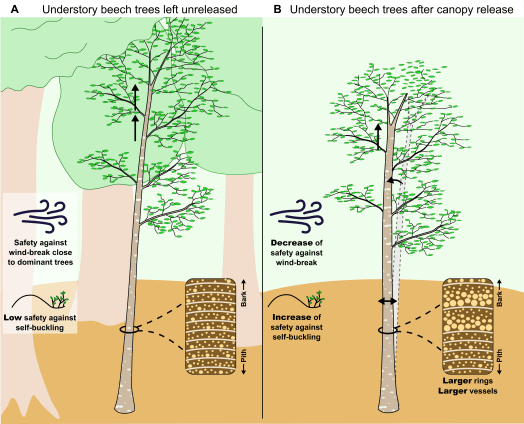
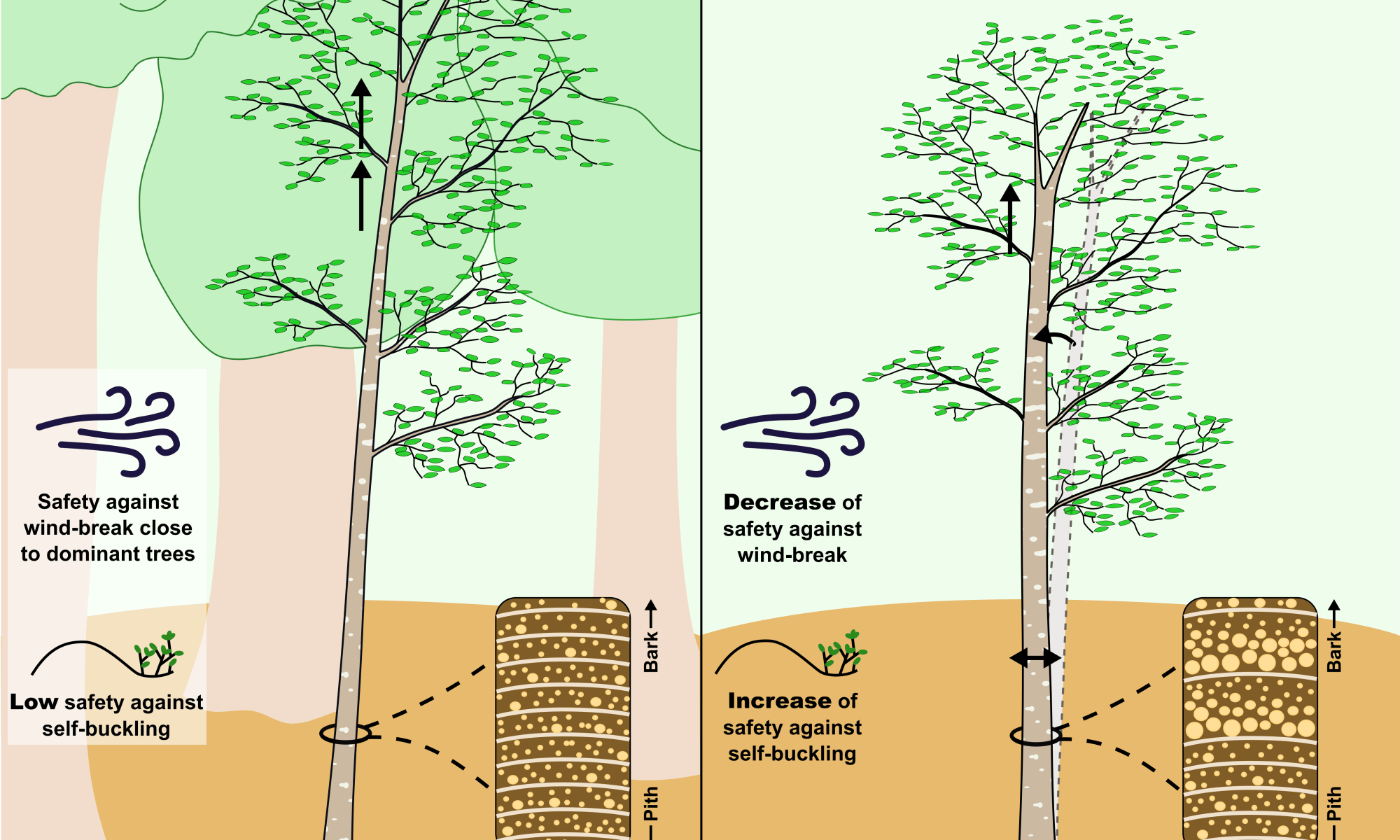
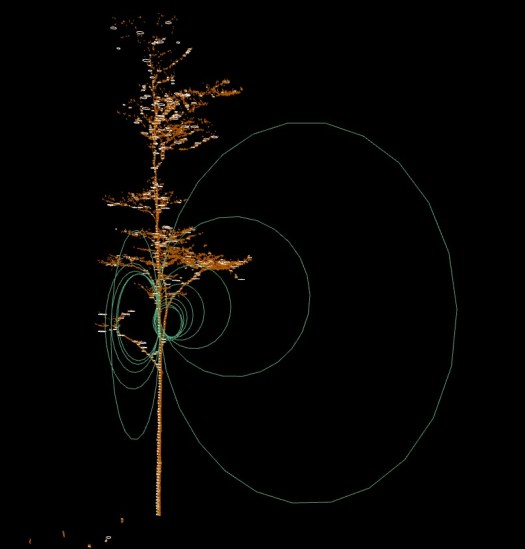
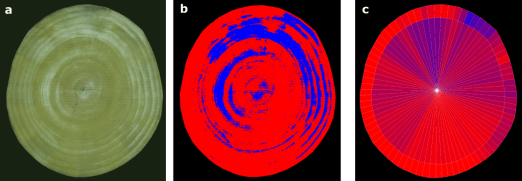
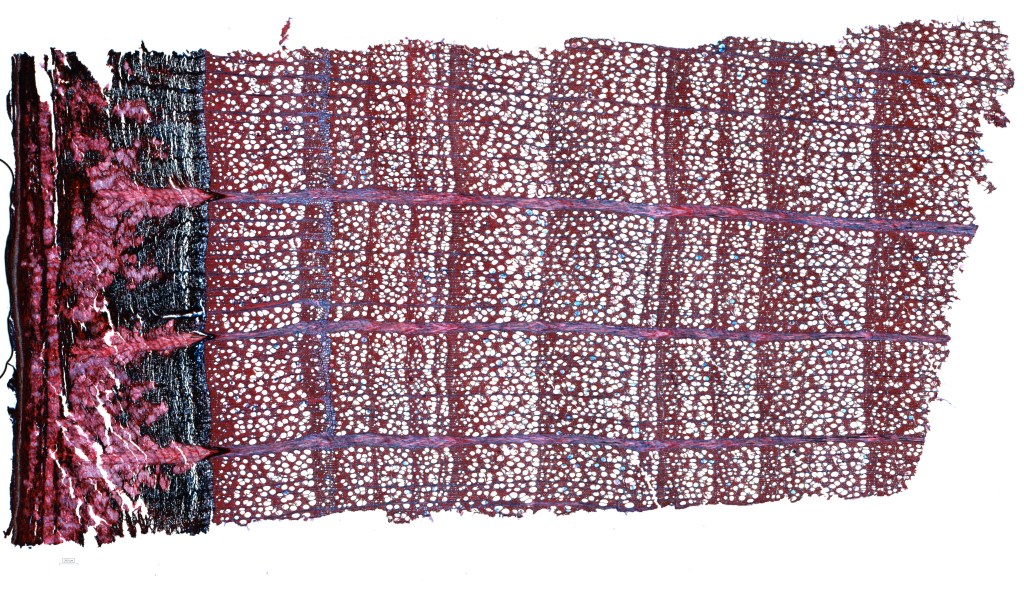
Opening of the canopy exhibits advantages (resources availability) but also new constraints (wind, higher evaporative demand). Rather well documented in saplings, response dynamics to canopy opening is less known in large trees. The thesis aims to identify the dynamics of responses to canopy opening in beech trees suppressed during long periods. Adopted approach is multi-disciplinary and multi-scale, based on a retrospective analysis of axial and radial growth, anatomy and biomechanical traits. For suppressed trees, the competition for light results in preferential allocation of biomass to axial growth in comparison with radial growth resulting in trees with high slenderness. Moreover, one third of suppressed trees are sagging. After the release, high slenderness presents a biomechanical risk: 15 from 36 trees are broken by the wind two years after the release. To increase their safety against the wind-break, trees reduce their axial growth during four years after the release and boost their radial growth reaching a stabilisation plateau after two years likely due to the size and resources limitations. Trees with lean angle higher than 6° up-right after the release. The tree ring hydraulic conductivity increases and stabilises after two years also. The dynamics of responses to canopy opening are therefore clearly trait dependent. Moreover, integrative approach highlighted the importance of size in the responses to canopy opening: while saplings adjust both wood tissue properties and tree geometry, large trees rely only on geometry adjustments.
Keywords: Fagus sylvatica L., canopy opening, growth, biomechanics, anatomy, wood.
Direction: Catherine COLLET and Jana DLOUHA
UMR LERFoB, INRA Grand Est-Nancy, France
AgroParisTech, Ecole doctorale RP2E and EIR-A, Nancy, France
LabEx ARBRE


